Showing posts with label Green Line. Show all posts

Thursday, September 23, 2010

A Slightly Delayed Farewell to Summer...


... And worse, a farewell to weekly concerts in Rittenhouse Square.

For those who stayed in Philadelphia this summer, I sincerely hope you took advantage of the free entertainment across the city. My favorite concert at Rittenhouse this summer had to have been The Homophones. I wasn't familiar with their music at all—I had only heard of them once or twice. But 30 seconds into their first song,"Holiday in Your Head", I was a goner. (How could I not have been? Their stage props include massive amounts of balloons.)

Singer Jason Ferraro's voice echoes The National's Matt Berniger's baritone, but the Homophones manage to create music that's more whimsical than anything I've heard by The National. Ferraro's lyrics are clever, quotable and catchy all at once; his words deserve serious listen.

For those of you who missed out, I have great news. The Homophones are reportedly playing at Pi Lam on October 22 with Pains of Being Pure at Heart. Uh, yeah. You have no excuse to NOT check them out.

I'm linking you to their myspace and I urge you to listen to "Polish Thugz" and "Ona Judge".

http://www.myspace.com/thehomophones

Here's the site where you can purchase their LP.

http://thehomophones.bandcamp.com/

Oh, and if strange music starts playing that doesn't sound at all like what I'm talking about... Scroll down through their comments and turn off the music that's linked to their page.

-Madi Mornhinweg

Thursday, July 29, 2010

Interview: ShitSleeper

I recently spoke with Philadelphia-area artist ShitSleeper (formerly Every Bunny Welcome, known outside of music as Alec Gabin) about his self-recorded new album, Sky & A Flag, released 7/23/10. Based in the label/collective Tamur Records, he has been part of numerous projects over the past years, but has largely recorded alone for his past few releases. To hear (and buy!) Sky & A Flag, you can gohere. All the tracks from the Every Bunny Welcome days are also available free on Tamur Records’ online catalog.

God Save the Beat: Could you give some background as to how you initially got started in music? Back in high school and immediately after?

Alec Gabin: Well let’s see. I played the trumpet in elementary school, even though I wanted to play drums. By high school I was taking music theory. Then I met 2 kids on my baseball team who liked music. They were a year older. I spent the entire summer after freshman year of high school in my friend’s garage writing and recording music with him. Duct taping mics to the ceiling. Screaming bloody murder angsty Interpol wannabes at all hours, all summer.

We started a band and I ended up being the singer, which was odd because I had never considered myself much of a singer. I still don’t. We had a band called the Pidgeons. I played Rhodes piano and sang. I bought a cheap drum set. I started screwing around on acoustic guitar. After high school I decided I wanted to not go to college and instead play music. So I moved in with current bandmates in North Jersey and played in New York City with a head full of dreams.

Since I was 15 I have been recording solo music. I started out using free software and one of those white computer mics that comes with most PCs. Until this last project (I am now 21) I have gone by "Every Bunny Welcome". Most Every Bunny Welcome songs were recorded in one night alone and only compiled into albums later. My latest record, Sky & A Flag, was not done this way. (And now I go by ShitSleeper.) This record was done over the period of a month, working on all songs at once.

Anyway, I'm rambling.

GSTB: Who are your greatest musical influences?

AG: Hmmmm. I could take this a lot of ways. A lot. Caustic Resin. Godspeed You Black Emperor. Chopin. Joanna Newsom. The Walkmen. Black Moth Super Rainbow's first album. Lots of soundtracks. Terminator, the Snowman movie. Hardcore techno. The Fall, Joy Division. I am also influenced by bands I don’t like. Bands I try NOT to be like. But I try to try not to be like anyone. I just try to let it all come through me.

Also the Subhumans. Slowdive. Broken Social Scene's first album. Hmm.

GSTB: What does this album mean for you in terms of your evolution as an artist? How was this album different from what you've done in the past? Is there a story behind how it came to be?

AG: This is the first album I've gone about recording as a whole, instead of a song at a time. It’s the first solo album I’ve ever had printed up, and mastered. It took a solid month of 8 or so hours a day. Sometimes more than 24 hours in a row. You get obsessed. I recorded it in my parents’ basement.

GSTB: Why the name change from Every Bunny Welcome to ShitSleeper?

AG: I just feel it’s time for a change. Every Bunny Welcome implies a certain innocence to the whole process that I just don’t feel anymore. I wish I did, I wish I could record without thinking like I did when I was 15, but I can't. I know too much, even though all I know is I know nothing.

GSTB: What inspired the shift in sound? I noticed in particular there's a heavier overall sound here, but there's even some strings as well. Was it a conscious change, or something that came naturally?

AG: I have always wanted strings in my music. I write music on piano, almost as classical music. I like to compose with notes, not set chords I did not make up myself. I have composed some choral and classical music in the past, but to me it's all the same. Music is music. I just got tired of my classical music not having a sweet trip-hop groove. I would have been using violin forever, but I only recently found a violinist for this album.

And as for the heaviness thing, it’s always been heavy. At least in my head. I also figured out in the past year how to make the Rhodes sound like a fucking Stegasaurus eating Catholic school children. That took a while. I figured out eating children fast, but Catholic children took longer.

GSTB: What are you most proud of in terms of your artistic output?

AG: I really like the album I did on GarageBand a while back. Sometimes it’s nice to be limited. I don’t know. This is a tough question. If I was really proud of anything I'd done, I might stop doing it. I've been trying to write the same goddamn song for years. Been trying to paint the same picture for years too. I'm proud more of the fact I got the album done than of the album's content itself. There's a big difference between garage band and logic pro with an interface etc...

GSTB: What's the next step from here? Do you see yourself recording another album as ShitSleeper on Tamur Records? What is your connection/status with Tamur?

AG: As always, I’ve been writing more and more music, absentmindedly on Monday morning pianos while my parents are at work. I’m thinking of doing a more acoustic/folky album. I was on a roadtrip recently and wrote a few acoustic guitar country-esque numbers I wanna do real basic. My next release will certainly sound smaller, if that makes sense. Less overdriven, less process, less cut up. I’m not ready for another one of these yet.

Tamur is a home for me. I really don’t consider myself having a label. But it’s my home. It’s the only sense of musical community I have anymore. Which is my own fault. But yeah.

GSTB: Anything else you'd like to say about the album, the creative process behind it, or you as an artist?

AG: What I really want is to find some musicians that I can click with.People that listen louder than they play. People that realize a member of a band is a part of a whole. The funny thing is... I really don't much like playing music alone, and I especially hate recording music. It’s a painful process. Takes forever, especially alone. I hate click tracks. I just want to have the group be able to play the song live at any time, all at once. Stick a mic in the middle and call it a recording. Recording alone so much begins to feel like literally "playing with yourself" in a basement. I’d like to get the music out of myself. And for this I need other people.

-Juan Carlos

Thursday, July 22, 2010

How I Never Got Over: the Roots


I remember buying my first Roots album, Phrenology. It was my 13th birthday present from my Grandma, whose 1930s upbringing has left her with a classical and jazz music taste that never even fully warmed up to the Beatles (and a poofy Jewfro so big that it nearly covers her face). As we were driving back from the CD store, I eagerly popped in the new album, ready to show off how cool and how much of a rebel I was listening to hip-hop. I turned it to a volume far too loud for a grandmother and began nodding my head to the singles, “Sacrifice,” “The Seed 2.0” and “Break You Off.” Then, something shocking happened. Grandma nodded her head a bit too. Grandma was enjoying hip-hop, and suddenly I was not such a young badass.

Yet, another strange thing happened too: I didn’t particularly care that my rebel status had taken a colossal hit. The music that hit my ears was new and exciting and by the end of the ride home, the Roots were already one of my favorite groups. Their take on hip-hop was unlike the other hip-hop albums I was nodding my head to back then, like 2pac’s Me Against the World and Nas’ Illmatic (still in the rotation) and not just because they didn’t encourage me to buy “Ecko” clothing or to call my friends “dawg.” Not to slight either of those classics, but the Roots push the creative boundaries of hip-hop in ways that other artists do not. Rather than follow the traditional hip-hop formula—defiant, ego-driven, emotional and at times inspiring lyrics sung over a background beat with heavy bass and a looped hook—the Roots make hip-hop music in which the rap can not be separated from the beat. In other words, the Roots first and foremost make music and music that can move you in ways a clever rhyme cannot. Take “Sacrifice.” Black Thought, the MC, stops rhyming with over a minute left, but that’s not particularly noteworthy. It’s that the last minute, during which ?uestlove's drums and the repeating chorus take over, is my favorite part of the song. It’s that it feels like the finale of one of the great rock songs I grew up with.

It may have taken another few years for me to stop hanging my pants so low below my waist that it angered my mom, but I matured with Phrenology. I learned to appreciate hip-hop, and music for that matter, in a new way. I learned to recognize the differences between the feeling a catchy hook, a powerful line or a cool riff can provoke and the total rush I have when I listen to song in which every small detail works together to create an awe-inspiring, beautiful, rich sound.

Yet, even as I have since continued to mature musically, I have never gotten over the Roots because, well, they have continued to mature too. As anyone versed in art knows, the great artists, whether you look at the Beatles or Pablo Picasso or W.B. Yeats, continue to push the boundaries of their art as they grow older. No, the Roots do not belong next to those names in terms of artistic achievements. However, in terms of their ability to adapt with their contemporaries and continue to create relevant, exciting art, they have been similarly exceptional.

Compare the opening tracks of Do you want more?!!!??!, their first major label album released in 1995, and How I Got Over, released last month. Do you want more?!!!??!(,) was more than a hip-hop album—it was an experiment in, as the opening lines of the album tell us, “organic hip-hop jazz.” Jazz and hip-hop have many historical connections (perhaps most readily apparent in Ali Shaheed Muhammed’s beats for A Tribe Called Quest). The Roots, however, took those connections to a new level with their piano and horn heavy jazzy beats, becoming leaders of “hip-hop jazz.”

The opening track of How I Got Over, “A Peace of Light”, on the other hand, is quite different. Indie rock stars Amber Coffman, Angel Deradoorian and Haley Dekle (all of the Dirty Projectors) sing a gentle, wordless harmony over a soft, jazzy ?uestlove drumbeat that leaves us in contemplative anticipation. Over the past fifteen years, the Roots have progressed from their original “organic hip hop jazz,” adding elements of soul, classic rock, electronica, and even the most current indie rock. But they no longer need to warn us (as they did on Do you want more?!!!??!) that the album will challenge our understanding of hip-hop. After over a decade of relevant, exciting Roots music that even my Grandma can jam to, we know that we can count on them for that.

-Jeremy

Tuesday, July 20, 2010

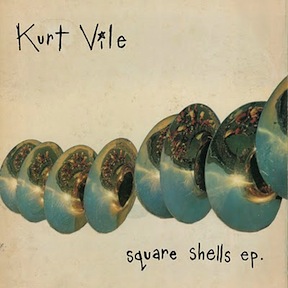
Philly Local: Kurt Vile and his "Square Shells"


In this digital age, some have predicted the end of the album as the prevailing medium of musical expression. But Kurt Vile's latest work is proof that the spirit of the album - a thoughtfully sequenced whole, with a beginning and an end, a thought process brought to its conclusion - lives on, in this case vicariously through its little brother form, the EP.

Square Shells, released this past May, has all the breadth of a good album, exploring moods and genres to create something versatile and varying. Each song carries its own distinct atmosphere, ranging from the nostalgic brooding of "I Wanted Everything" to the more light-hearted "Ocean City", all of which are united by Kurt's craftsman's touch.

The EP is a lovely play on the contrasts between psychedelic and folk influences, shifting easily from drone-dominated instrumentals ("The Finder," "Invisibility: Non-Existent") to the more traditional folk-influenced, guitar-augmented vocals. Of the latter category, "I Know I Got Religion" is a stand-out. It feels like something recorded late at night in a hotel room, a moment of solitude eased by the familiarity of fingers sliding across frets.

Kurt's psych folk fusion reaches its most symbiotic form in the final track, "Hey, Now I'm Movin." The song swells to exquisite heights in the final few minutes, spinning a web of reverberated sound that will surely leave you excited about where it is he's moving to, and what kind of music will come of it.

So show some Philly pride and give this guy a listen - we'll probably be hearing a lot more from and about him soon.

Melany's grade: A

-Melany

Sunday, July 18, 2010

The Seekers: Busking in Philadelphia


-- Courtesy Jeff Metzner/jeffmetzner.com

Planted in front of a rusted statue in Rittenhouse Park, Philip De Genova wipes a maple seed from his brow and then continues to play, coaxing soft whistles from a wooden flute. He cleans sweat from his disc-shaped glasses and then turns one of the wrinkled sheets on his music stand, singing as he goes so the rhythm never breaks. “La da di daaaaaa, bada da baaaaa…”

At 67-years-old, Phil is like the grandfather of Philadelphia’s “buskers”, a term for people who perform in the streets, or underground, or anywhere in public, really. Phil is delicate, seasoned, and reflective. He wears long silvery hair and a puffy mustache. You can find him busking around the city everyday, but only for the last couple years. He spent seven before that studying Philosophy and Theology in Rome, stifled in the Catholic order’s orchestra.

“They didn’t like it when I played what I wanted,” he says, pressing one eye against the end of his flute, examining it like a telescope. “They wanted me to play their stuff.” So Phil camped under the Ponte Sant’ Angelo bridge instead, near the Vatican. Because the bridge’s tubular shape mimics the flute’s, Phil relished performing there. “The sound was perfect,” he beams.

“I never used to put out the basket [in Rome],” he says nodding to an open flute case strewn with dollars. “And if people gave me money I’d give it to the homeless that used to hang around the river.” But when he came home in 2008, Phil started playing at the local concourse and put out a basket for donations. “As soon as someone put a dollar in there, I thought, ‘Wow, this is pretty cool.’” He laughs. “Now I don’t even think twice about it…it pays all my bills…I don’t even go to the bank anymore.”

Phil considers the money a gratuity, a way for people to tell him that they like what he’s doing, and he should keep doing it. But not everyone agrees, like the man who works on the third floor of the high-rise that faces his corner of the park. “He would call the police every day on me,” Phil says. Eventually, Phil suggested to the police that the man was abusing their system and they stopped accepting his complaints. But that wasn’t the end of it. “One day…he came down…and he started to berate me, so I just looked at him, “cuz I don’t get involved in people’s negativity, y’know…” he says, sweeping away the air with the back of his hand. He lifts the flute to his mouth, twittering lightly.

Sometimes when Phil’s down at the local concourse, he gets pestered by kooks and the homeless. “I don’t get a thick skin, “ he says, shaking his head. “But I do learn to let it bounce off. That works better than having a thick skin…that interferes with the music.” Whenever Phil gets into a topic he doesn’t like, he’ll break eye contact, drift off for a moment, and retreat into his flute. Phil will admit to certain gripes — he hates being muffled by the leaf-blowers in the park and he stiffens when he talks about his time with “the Catholics” in Rome. He’ll quickly try to dismiss it all, to keep the air clean for his music, but some things always reappear. When Phil explains that any familiar “Catholic” tunes you hear are borrowed from the Protestants, he adds, “But I have to be careful talking about certain things."

Today Phil is playing oriental melodies, his favorite. Their tone is pastoral and proud, but with sadness underneath. Phil’s in touch lately with a couple of Chinese artists as potential collaborators, particularly with a woman who plays the erhu, a two-string fiddle resembling a homemade vacuum cleaner. “A warm natural sound,” he says. “Perfect for the flute.” Phil’s not sure what will become of it all, but either way he’s not looking to make waves in the music world this late in the game. He just enjoys sharing his gift now, unencumbered — he hasn’t taken orders since his late-50’s army stint. Phil’s content living a monastic life, quiet and solitary, the way he was trained. “…We’re all loners,” he says of the busking community. “Almost all of us.”